A First Festival Morning, Planned Around One Pause
Plan a first festival morning around one anchor event and a deliberate gap, so you can arrive, settle and still have room for the day to surprise you.
The usual mistake in planning a first festival morning is to fill it with every appealing early event, then spend the day recovering from the schedule. A first festival morning works better with one anchor event and a deliberate pause around it: enough structure to get moving, enough space not to turn breakfast into a race.
The anchor might be a communal breakfast, a craft session, a dawn walk or a short performance. The pause is not another activity disguised as free time. It is a protected stretch for arriving, eating, finding the right place, or changing your mind without making the rest of the morning collapse.
1. What should the anchor event do?
Choose one event that gives the morning a reason to begin. It need not be the most important thing on the programme. A modest event can work especially well if it gives you a clear destination and leaves the rest of the day open.
Look for an event that suits how you want to enter the festival’s shared life. A guided walk offers movement and conversation; a workshop offers a task to focus on; a short music or storytelling set gives you a place to sit and listen. A large headline performance may be less suitable if getting there requires an early queue or a long trek across the site.
Consider what the event asks of you as well as what it promises. Does it involve standing, carrying materials, joining a group, or arriving at a particular entrance? An anchor should make the morning legible, not add a hidden preparation shift.
2. How much space should sit around it?
Build the gap from the actual transitions in your morning. Count the time it takes to wake, dress, collect what you need, reach the venue and locate the gathering point. Then leave room for one ordinary delay: a slow queue, a misplaced water bottle or a conversation that runs past its polite ending.
Do not fill that room with a second event merely because it appears in the schedule. A gap is useful precisely because it has no competing appointment. It can absorb the small frictions that make a timetable look tidy on paper and rather less tidy on grass.
Think of the pause as the margin around a handwritten note. The words remain readable because they are not pushed against the edge. In the same way, a little unassigned time lets the anchor stand on its own instead of being squeezed between obligations.
3. How do you choose an event that fits the morning?
Compare options by the kind of attention they ask for, not just their subject. A quiet listening session may suit someone who wants a gentle start, while a practical workshop may be a better fit for someone who wakes ready to do something with their hands. Neither is inherently more relaxed; the question is whether the event’s pace matches yours.
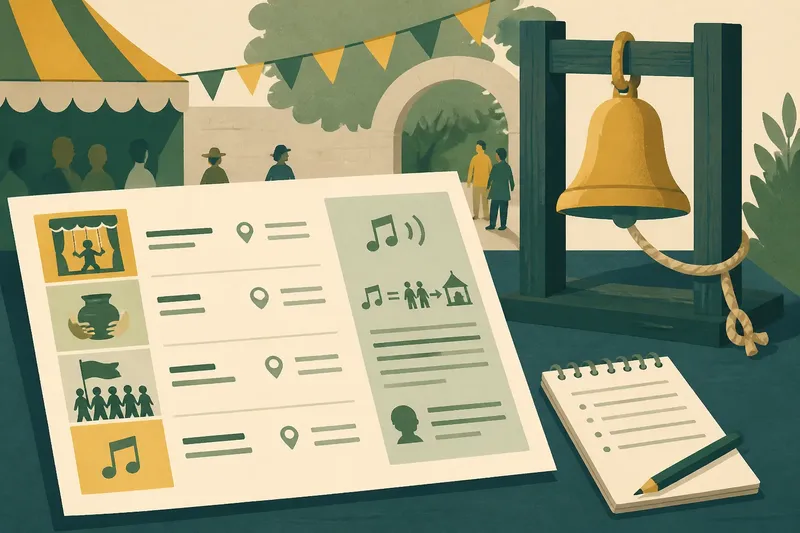
Check the programme for practical details such as duration, meeting point, access arrangements and whether materials are supplied. If the event depends on weather or a specific location, note what the organisers say will happen if plans change. Follow the programme and organiser guidance, particularly where access or safety arrangements are involved.
Say you are choosing between a short riverside walk and an early printmaking session. If you want to wake gradually, you might select the walk, leave a gap afterwards for a warm drink and a return to camp, and skip the print session rather than trying to fit both in. The observable result is a morning with one clear outing and a genuine interval, not two starts and no pause.
4. What belongs in the pause?
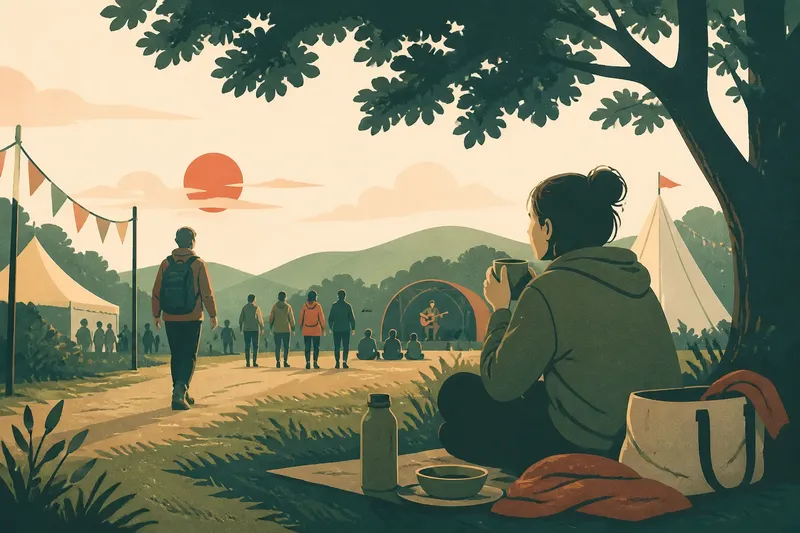
Keep the pause simple and nearby. It might include breakfast, a sit-down in a shaded area, a refill at a water point, or time to wash and change after an outdoor event. Choose one or two likely needs, rather than drafting a second itinerary for the supposedly empty part of the morning.
Where you take the pause matters. A busy path, a food queue or the edge of a performance area may not feel restful, even if you have no scheduled commitment. Look for a place where you can sit without blocking movement and where the next part of the day is easy to reach.
Bring only what serves the plan: perhaps a cup, a light layer, a water bottle and the item the anchor event requires. Keeping the pause physically uncomplicated makes it easier to use it for rest rather than rummaging through a bag for a small object with a large sense of urgency.
5. How can the plan stay flexible without becoming vague?
Give the anchor a clear start and a clear destination, then treat the gap as adjustable. You might decide that breakfast happens after the event, but leave open where you eat and whether you sit with friends or alone. That is a real plan, even if it lacks the sort of detail favoured by a military map.
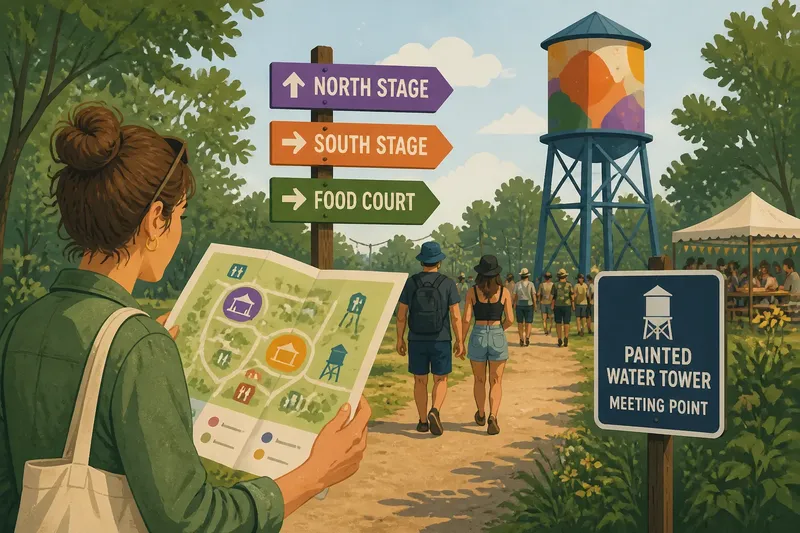
Agree on one simple meeting arrangement if you are attending with others. For instance, you can meet at the event’s marked gathering point and decide afterwards whether to continue together. This avoids turning the pause into a search operation for a group whose members each had a different understanding of “near the café”.
Keep one alternative in mind if the anchor is cancelled or no longer appeals. It can be as modest as taking a quiet walk or returning to the campsite for breakfast. The alternative should preserve the morning’s shape—one purposeful start, then room to breathe—without demanding a replacement performance.
6. What questions help settle the plan?
Should the anchor be the earliest event?
No. Choose the event that suits your energy and logistics, not the one with the most ambitious start time. A later anchor can still give the morning structure while allowing a slower wake-up.
Does the pause need a fixed duration?
It helps to protect a clear stretch of time, but the exact length can depend on the event and the site. Think in terms of what the gap must allow—food, rest, travel or a change of clothes—rather than making it another tightly timed appointment.
What if friends want to add another activity?
Ask whether the extra event would replace the pause or fit outside it. If it consumes the only unassigned stretch, decide together whether that trade suits everyone before adding it to the morning.
What if the anchor no longer feels appealing?
Drop it if attending would make the morning feel like an obligation. Keep the pause, choose a low-effort alternative and let the day begin without pretending that a change of plan has ruined anything.
7. How should the morning end?
Let the pause finish with a small cue that the open part of the day is over. You might check the programme for the next event, refill your bottle or agree where to meet later. A simple transition is enough; there is no need to turn the morning into a ceremony about being organised.
Then leave the next block of the day unclaimed until you have used the pause. You may discover a conversation, a stall or a patch of shade worth staying in. A first festival morning planned around one pause is useful not because it dictates what comes next, but because it gives you a settled place from which to choose.